
H5 Mini-Games: The Next Trillion-Dollar Gateway for Overseas Social Networking?
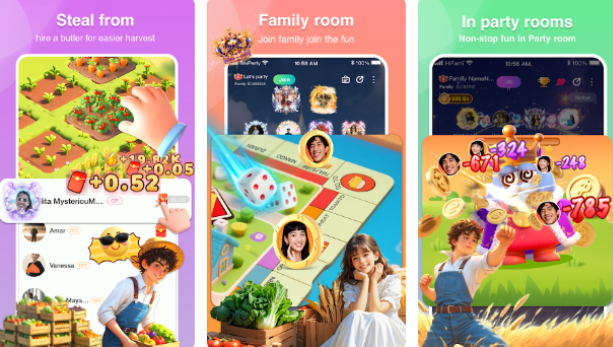
In Q1 2025, the Southeast Asian social app market witnessed a dramatic scene: Hifami, which had been online for only 3 months, surpassed competitors that had heavily invested in AI matching algorithms by a wide margin, with its daily active users (DAU) exceeding 2 million, thanks to 16 built-in retro H5 mini-games. Its user profile shows that women over 35 account for 47% — a group long ignored by traditional social platforms, who became the main force behind the product’s growth due to the empathetic experience brought by light games such as “virtual flower planting” and “pixel puzzles”. Coincidentally, Pookie, a virtual social platform, has built “collaborative social” scenarios through H5 games, with users averaging 83 monthly sessions, 4.2 times that of pure chat products. These phenomena confirm a key trend: as the ZOOM generation (born between 1995-2010) becomes the main force in socializing, their demand for products is upgrading from “quick matching” to “sustained emotional resonance”, and H5 instant games have become the shortest path to achieve this goal.
一、Why H5 Games?
The traffic dilemma in the current social app market has become intense, and the game between customer acquisition costs and retention rates is a life-or-death struggle for most entrepreneurs. In 2025, the cost per install (CPI) for social apps on iOS in Tier 1 countries reached $8.7 (Data.ai), a 47% year-on-year increase, but the median next-day retention rate was only 34%. On the app store front, Google Play’s review cycle has been extended to 45 days, and many Southeast Asian countries require social apps to pre-install content filtering systems, leading to a 200% surge in development costs. However, the practice of Yalla, a leading social platform in the Middle East, provides a way to break the deadlock. Its H5 game lobby shortens the customer acquisition path by 60%, with users taking only 11 seconds from clicking a link to starting a game, far less than the 126 seconds required for traditional app download and activation.
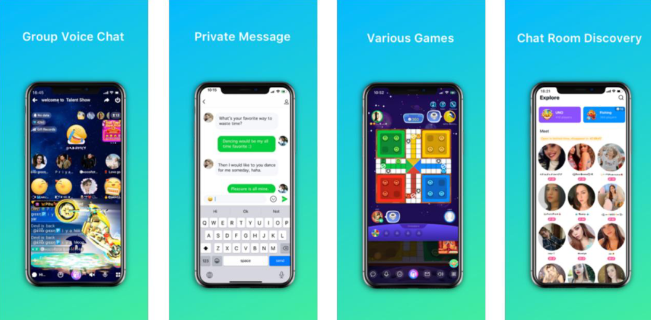
At the same time, social efficiency is undergoing a second revolution. The 2024 “Global Stranger Social White Paper” reveals that the average effective conversation duration for pure video matching is only 8.2 minutes, with a disconnection rate of 91% within 24 hours after matching, making the shortcomings of 1V1 socializing obvious. The breakthrough of the technological critical point in 2025 has brought a turning point. After the Cocos engine supports WebGPU acceleration, it can realize synchronous loading of games such as “Pictionary” during live broadcasts, with the delay reduced to within 200ms, and the experience is close to native. A typical example is Chamet, which automatically launches a “two-player puzzle” H5 game after successful 1V1 matching, increasing the conversation duration to 22 minutes and the payment conversion rate by 3 times.
More importantly, H5 games have achieved an atomic reconstruction of emotional connections. A 2025 study by the MIT Media Lab shows that collaborative games prompt the brain to secrete 40% more β-endorphins than pure voice chat, which can significantly enhance trust. Intergenerational needs are also changing, with 68% of GenZ users believing that “accomplishing something together” is more in line with social etiquette than “directly expressing favor”. Hifami’s “Pixel Farm” game precisely meets this need, requiring matched users to collaborate in planting virtual crops, with an interaction frequency of 19 times per group within 7 days, far exceeding the industry average of 5.3 times.
二、How H5 Reshapes the Underlying Logic of Social Networking?
In terms of cross-platform growth, H5 games have become the core engine of “social as an entrance”. In 2025, deep linking technology matured, enabling H5 games to achieve “cross-app state synchronization” through TikTok and Instagram Stories. “Emoji Battle” on Snapchat is a typical hit, allowing users to generate battle links to share on Discord, acquiring 5 million users within 3 days, with a social sharing conversion rate of 1:3.7, meaning 1 player can bring 3.7 new users. Its technical architecture forms a complete closed loop: H5 game social platforms reach users through TikTok deep links, WhatsApp instant invitations, Discord embedded cards, etc., and new users can start directly without downloading.
In terms of experience upgrading, H5 games are moving towards the metaverse level. Breakthroughs have been made in graphics rendering technology. WebGPU + WebAssembly technology enables H5 games to support 120FPS frame rate and 4K image quality. For example, Pookie’s “3D virtual fitting room” H5 module allows users to adjust clothing physics engine parameters in real time, with an ARPU value of $7.3, more than 3 times the industry average. AI-driven content generation has also enriched the experience dimension. It can not only automatically generate game tasks based on user chat keywords, such as triggering the “Rhythm Master” game when detecting the topic of “music”, but also generate game avatars using 3 selfies through Hifami’s AI face pinching system, increasing the conversion rate by 58%.
Compliance has become a strategic moat for H5 to reshape social logic. In terms of avoiding cultural sensitivities, after a Middle Eastern dating app replaced its sensitive video function with the H5 game “Desert Treasures”, the payment rate actually increased by 28%; during religious festivals in Indonesia, the game lobby automatically launched the “Ramadan Lantern” collection activity, with DAU growing by 40%. Age-stratified control is also more precise. The H5 games of the Brazilian voice chat platform Weet can automatically identify user ages and only open educational puzzle games to minors.
三、The Trillion-Dollar Track Revealed by Data
Data from Newzoo’s “2025 Global H5 Game Ecosystem Report” clearly outlines the explosive potential of the track. The global number of H5 game users increased from 480 million in 2023 to 1020 million in 2025, an increase of 112%; the proportion of game traffic built into social platforms increased from 31% to 46%, a growth of 48%; and the average daily game duration per user soared from 8.7 minutes to 22.1 minutes, an increase of 154%.
Monetization efficiency has also been reconstructed in three dimensions driven by H5 games. Tiered payment design has achieved remarkable results. The H5 gift props of the show live broadcast app “StarLive” are priced at $4.99, with a conversion rate 2.3 times that of the reward function; Pookie has launched “gamified trials” of virtual clothing, allowing users to experience through H5 dress-up games first, and then guide them to purchase in the NFT mall. Advertising integration has ushered in a revolution. Brazil’s Weet implanted headphone brand advertisements in the “Voice Karaoke” game, recommending products through voiceprint recognition, with a click-through rate (CTR) of 17%; incentive videos have also taken on new forms, where users can unlock special game skills such as hint pens in “Pictionary” by watching advertisements. At the same time, the H5 trial version has also built a cross-platform diversion system to native apps.
四、2025 Innovation Product Map: Case Study Analysis
Hifami has created a powerful emotional engine relying on nostalgic economy. Its core technology stack includes a low-code H5 development platform, which compresses the game launch cycle to 3 days, and real-time facial expression capture function, enabling game characters to synchronize users’ facial expressions with a delay of <300ms. In terms of innovative mechanisms, it has launched “game achievement social monetization”, where users can exchange video chat coupons by clearing “Pixel Farm”, and designed a 1960s-style “Pipe Mania” game to facilitate cross-age matching. The final results are remarkable, with the lifetime value (LTV) of female users aged 35-50 in Southeast Asia reaching $21.7, 3 times the industry average.
Pookie focuses on the social assetization in the Web3.0 era and has built a unique on-chain game architecture: user behavior data of H5 games will generate Soul Bound Tokens (SBTs) as social credit credentials to unlock advanced chat permissions. Data shows that its users’ willingness to pay for game virtual assets reaches $8.2 per month, and the retention rate of users holding SBTs is 92%, far exceeding the 41% of users without SBTs.
Chamet has promoted the integration revolution of real-time video and games. Technically, it realizes the picture-in-picture synchronous rendering of video streams and game screens, and has also developed voice-controlled game operations, controlling game characters through microphone recognition commands. In terms of scene design, it has created an ice-breaking game pool, which automatically recommends games such as “Two-Player Puzzle” and “Music Relay” according to the tags of both parties, and sets up reward and punishment mechanisms, where the winner of the game gets the right to distribute reward tokens.
Conclusion
When Saudi women try on new Parisian styles with AR in the “Virtual Fashion Show” H5 game, and when Brazilian slum youth team up with Silicon Valley engineers through the “Voice Parkour” game — these instant games are like magical “connectors”, bringing people from different countries, languages and life backgrounds together. This year, Discord released data: communities with H5 games have users staying an average of 53 minutes a day, and 78% of people remain in the group after 6 months; while in communities without games, only 29% remain after 6 months, showing a significant gap.
This exactly reveals the core essence of social products in building user connections: in interpersonal interaction scenarios, “joint action” is often needed as a link to naturally eliminate the awkwardness of silence and make emotional flow smoother. H5 instant games are a high-quality carrier that adapts to this demand — they have no complicated thresholds, but can quietly shorten the psychological distance in lightweight interactions, making the social process both natural and immersive.
Today, this field has nurtured a $2.5 billion market space. For products, if they can deeply integrate game genes into the core architecture, break through the industry pain points of customer acquisition and retention with low-threshold and highly adaptable technical forms, and reconstruct user emotional connections through collaboration and resonance in game scenarios, they may be able to mark their exclusive value position in the evolution of the digital ecosystem.

